Closed-loop neuromodulation, translational pipelines, and diverse models in UK neurotech
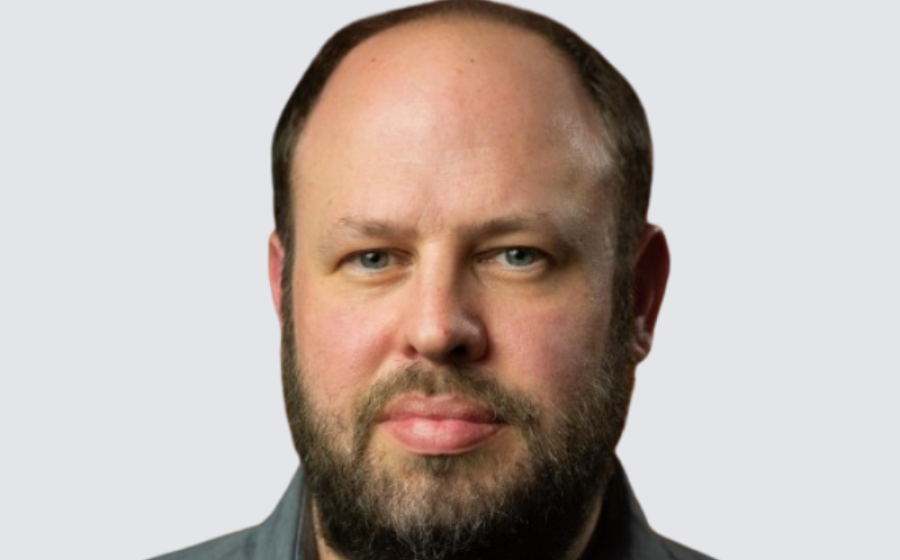
A conversation with Professor Andrew Sharott
In an insightful interview on adaptive brain stimulation and translation pathways, Professor Andrew Sharott, Associate Director of the MRC Centre of Research Excellence in Restorative Neural Dynamics, discusses the future of neurotechnology, clinical integration challenges across the NHS, and how regional innovation hubs are bridging the gap between academic bench science and patient care.
Interviewer: How are adaptive and closed-loop neurostimulation techniques shifting the clinical baseline for neurodegenerative and psychiatric conditions, and what hurdles remain?
Professor Andrew Sharott: The great promise of closed-loop stimulation is that it has the potential to achieve different and more substantial clinical effects than with classical stimulation paradigms.
Conventional Deep Brain Stimulation (DBS) treatments deliver continuous, high-frequency electrical pulses, typically around 130 Hz, without any relation to ongoing, real-time brain activity. What makes adaptive and closed-loop systems special is that by timing or triggering stimulation using real-time tracking of specific aspects of underlying neural activity, you can modulate that activity more precisely and effectively. This opens up new therapeutic possibilities.
For example, in neurodegenerative conditions like Alzheimer’s disease, damage to memory circuits weakens important oscillatory activities in neural networks crucial for forming and recalling memories. With closed-loop systems, we could measure what remains of these oscillatory signals and deliver targeted stimulation precisely in phase with them to reinforce and rebuild those dynamics, something conventional, continuous stimulation is not well-suited to achieve.
In terms of hurdles to everyday deployment, hardware exists that can deliver adaptive paradigms, but setting individualized parameters remains complex. It often involves iterative back-and-forth between clinicians and patients to fine tune settings within device constraints.
Currently, my philosophy favours keeping algorithms as simple as possible to achieve the desired modulation of neural activity. Simpler algorithms make engineering hurdles, parameter tuning, and regulatory approvals easier to navigate. As more diverse closed-loop approaches are submitted to regulatory bodies and their effects on the brain become better understood, it should become possible to attempt more complex paradigms.
Interviewer: Looking at the UK neurotech ecosystem and commercialisation infrastructure, how well positioned is the country across academic research, the NHS, clinical trial pipelines, and private investment?
Professor Andrew Sharott: There is strong evidence that the UK system works. Across UK universities, numerous neurotechnology spin-outs have successfully secured both public and private funding. A prime example is my colleague Professor Tim Denison, who was one of the founders of Amber Therapeutics, a neuromodulation company that raised over £75 million in venture capital investment supported by Oxford University Innovation and Enterprise.
The UK possesses concentrated centres of world-class expertise; for example, Manchester, Glasgow and Cambridge have particular strengths in advanced materials science; Oxford, Newcastle and University College London have a high concentration of investigators in neural dynamics; King’s College London has a strong track record of translation in psychiatric applications and Nottingham has several teams working on non-invasive/peripheral neuromodulation. The multi-institution MRC Centre of Research Excellence in Restorative Neural Dynamics serves as a major national engine for translational neurotech research, bringing together multiple research organisations as well as industry partners, charities, clinical specialists and the public.
The primary goal now is thus to join up these ecosystem components to streamline clinical trials and commercialisation, ensuring research innovations transition into everyday clinical practice.
Interviewer: What are the main bottlenecks in getting these innovative neurotech devices into NHS clinics, and how can pathways be improved?
Professor Andrew Sharott: The NHS is a complex organisation that can act as both a major enabler while, like any health system, presenting it’s own specific complexities. Different NHS Trusts operate in distinct ways and handle diverse patient populations, creating variability across the system. A significant challenge for the UK community is to develop more streamlined and generalisable clinical trial pathways, with a consistent framework that can facilitate studies across academic and industry settings.
There is tremendous academic and clinical appetite to conduct safe, valid trials particularly involving non-invasive modalities like focused ultrasound, Transcranial Magnetic Stimulation (TMS), and Transcranial Alternating Current Stimulation (TACS). Establishing standardised pathways for these novel therapeutics could help accelerate the approval and provision of regulated, safe devices for use within the NHS.
Interviewer: Agencies like ARIA and programmes like Cambridge NeuroWorks adopt high-risk, fast-paced innovation models. How do you view their role in bridging the gap between bench science and clinical neurotech?
Professor Andrew Sharott: Accelerators like Cambridge NeuroWorks take a distinct, commercially led approach. Instead of starting strictly from basic research, they begin with young entrepreneurs and commercial ideas, asking, "Can we build a viable solution around this clinical need?" Combined with funding bodies - like ARIA – that are willing to invest in high-risk / high-reward ideas this offers a complementary perspective to other new initiatives, such as the MRC Centres of Research Excellence, that focus on long-term, multidisciplinary activity around a single challenge. Creating structured points of interaction where these different models overlap has the potential to further enhance their impact.
Initiatives like the upcoming UK Symposium on Neuromodulation and Neurotechnology 2026, to be held in Oxford from 15-16 December can provide opportunities for these interactions. The event will bring together researchers, clinicians, engineers, and industry leaders working at the forefront of brain science and innovation across the UK. Participants will highlight the breadth and ambition of the latest advances in neuromodulation and neurotechnology and will explore how these approaches are redefining the treatment of neurological and mental health disorders. Speakers and poster presentations will highlight developments in sensorimotor rehabilitation, wearable technologies and large-scale trials of neuromodulation. Panel discussions will examine emerging opportunities and challenges in governance, ethics, and the commercialisation of next generation. The event is sponsored by several of the major initiatives in neurotechnology: Cambridge NeuroWorks, ARIA, Sprite+, NIHR BRC, and the MRC CoRE in Restorative Neural Dynamics.
Early-stage startups face massive resource, energy, and regulatory demands when running clinical trials. Connecting emerging founders with experienced academics and industry leaders can provide the backing required to test bold ideas, de-risk translation, and bring next-generation neurotechnologies to market efficiently.