Failing fast, innovating faster. Rethinking scientific discovery in neurotechnology
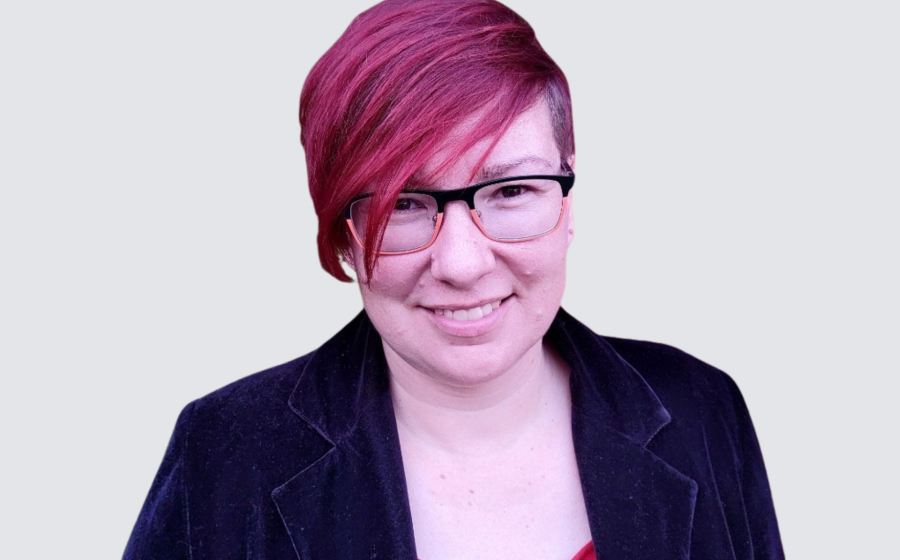
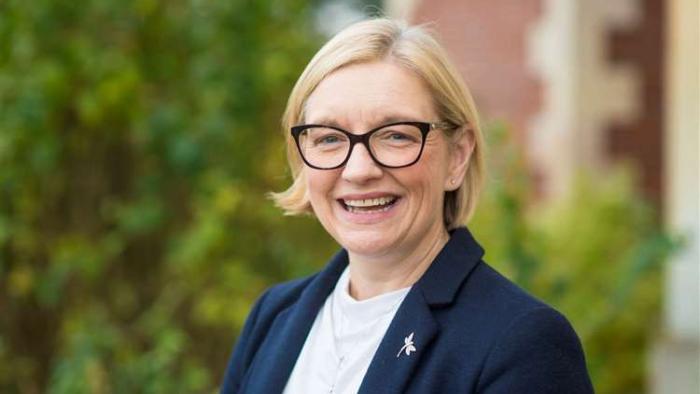
In an interview with Dr Aga Iwasiewicz-Wabnig, Director of the Maxwell Centre and Leadership Team Member at Cambridge NeuroWorks, we discuss high-stakes translational research, and why the popular Silicon Valley refrain "fail fast, fail often" often falls flat.
Redefining "failing fast"
Interviewer: You have moved between deep physics research, worked at the interface with industry, and now hold leadership roles at the Maxwell Centre and Cambridge NeuroWorks. Where did you first see "failing fast" work as a genuine advantage rather than just a slogan?
Dr Aga Iwasiewicz-Wabnig: I have always been curious about how things can work better and have naturally looked for opportunities to experiment. My PhD is in experimental physics, so I have lived and breathed this approach for years. There is a lot of inertia in modern science because discovery research often requires massive machinery and its funding processes take time. People started to accept that it can take months from an idea for an experiment, to getting it funded, obtain a result, and share it. But that slow pace isn't intrinsic to the science itself, it comes from the system around it. As a physicist, I am naturally allergic to inefficiency, so I am always looking for ways to tweak and improve the process of how new knowledge is generated. If an idea is exciting, why wait? The goal should be to remove unnecessary barriers and delays.
Removing inertia and building a supportive community
Interviewer: In traditional academia, negative or non-working results are rarely published. How does the ecosystem at Cambridge NeuroWorks change that culture?
Dr Aga Iwasiewicz-Wabnig: Academic careers are traditionally built on publishing positive results and moving forward in a specific, supposedly linear way. Nobody wants to be directly associated with "failed" hypotheses, because researchers are not rewarded for sharing non-positive findings. The Cambridge NeuroWorks ecosystem backed by ARIA flips this model. It actively encourages and celebrates researchers who pursue bold, ambitious moonshots, accepting that some ideas will not unfold as originally anticipated. As long as our collective knowledge increases, humankind moves forward. We learn what works and what doesn't, allowing us to make informed next steps. The worst thing you can do is sit in the middle, fearing “failure”, and overthinking forever without trying, because then you learn nothing and remain stuck.
Interviewer: How do you help researchers distinguish between an idea that needs more time and one that needs to be abandoned or pivoted?
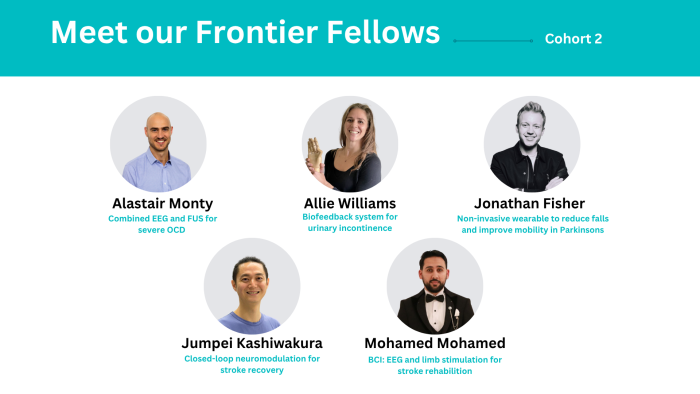
Dr Aga Iwasiewicz-Wabnig: Coming from a physics background into neurotechnology allows me to ask very straightforward, fundamental questions. Specialists close to a field often rely on established domain intuition. An outsider brings fresh questions, which can appear naïve, but have potential to challenge core assumptions and find new perspectives. Within Cambridge NeuroWorks, fellows have direct access to a cross-disciplinary community that tests and challenges their ideas constructively. We don't dictate how they should pivot; we give them full agency while providing perspectives and counter points they might not have considered. This rigorous and continuous feedback loop helps them realize whether a pivot is required much earlier than if they had pursued the project in isolation all the way to the end.
Interviewer: How do you maintain a researcher's momentum and confidence when their initial idea doesn't work out?
Dr Aga Iwasiewicz-Wabnig: A critical part of a supportive research environment is separating the fate of a hypothesis from the person taking the scientific risk. When an idea proves unviable, it isn't framed as a personal failure. Instead, it's recognized as a necessary learning step and a foundation of a better hypothesis. Researchers are free to experiment because their ideas can evolve, pivot, or even shift to another application. The more you practice this approach, the less odd and scary it will feel.
There is a saying: "If you travel alone, you can go fast; if you travel together, you can go far." If you travel alone fast, you might head rapidly in the wrong direction. Working within a supportive cohort, experts and facilitators ensures that when you need to pivot, you have the collective wisdom around you to head in the right direction.
Operations, risk, and advice for ambitious researchers
Interviewer: How does having a clear "North Star" help projects navigate technical changes or pivots?
Dr Aga Iwasiewicz-Wabnig: Our fellows typically focus on alleviating a specific neurological condition or debilitating symptom. That end goal of improving patient’s lives is their North Star. Because their ultimate focus is solving a pressing societal and patient need, rather than proving that their initial technical hypothesis was the only answer, pivoting becomes much easier. They care about delivering a real solution through healthcare systems like the NHS to the end patient.
In a traditional research system, testing multiple directions might require writing new grant proposals for every hypothesis, stretching the timeline over several years. Within our model, we encourage fellows to test and cycle through several hypotheses within a single year, funding is in place and they are welcome to change their mind, even quite drastically as they progress.
Interviewer: How do you balance taking bold scientific risks with managing operational and regulatory requirements?
Dr Aga Iwasiewicz-Wabnig: There are two distinct types of risk in deep technology: scientific risk and operational risk.
We want to maximize scientific risk by encouraging researchers to pursue bold, highly ambitious hypotheses. Simultaneously, our goal is to minimize operational risk. We build a framework around researchers that removes administrative delays, streamlines access to experts and patients, and assists with regulatory integration through bodies like Health Innovation East. Consider the rapid development of mRNA vaccines during COVID-19. Timelines were compressed from years to months not by cutting corners on safety or scientific rigor, but by removing operational slack, automating to avoid handover errors and unnecessary delays. We strive to apply that same discipline to neurotechnology, ensuring strict regulatory safeguards while eliminating wasted, idle time.
Interviewer: What would you say to a researcher who has a bold idea but is terrified of pitching something that might not work?
Dr Aga Iwasiewicz-Wabnig: Don't be afraid to learn – you can examine your idea critically from every angle, but there may still be blind spots you can only find with help of others. All you need to recognize is that a hypothesis proving incorrect through robust iteration and questioning is not a personal fault. The thing we should fear is lack of progress!